

Mauritanian grass
Ampelodesmos mauritanicus (Poir.) T.Durand & Schinz
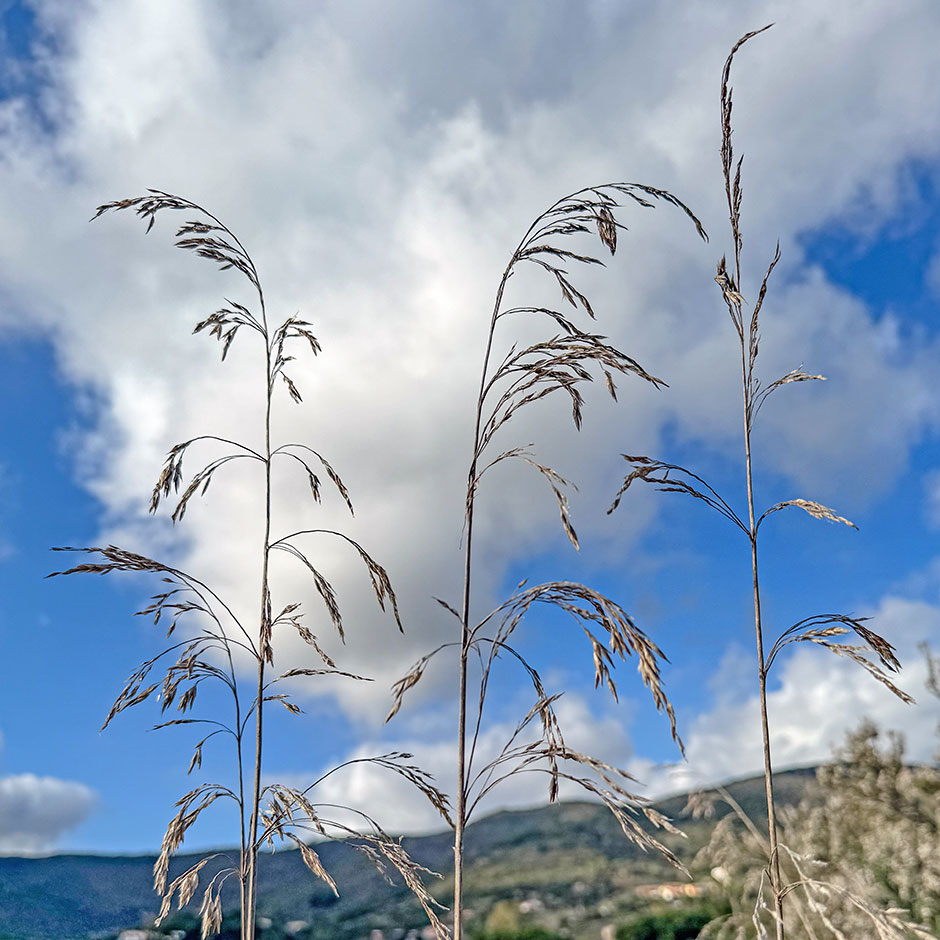
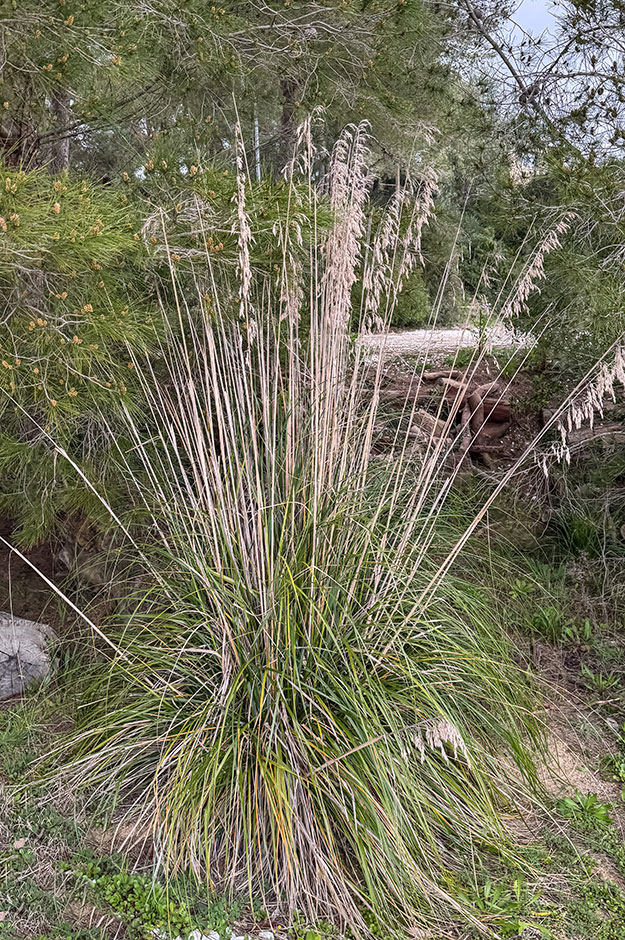
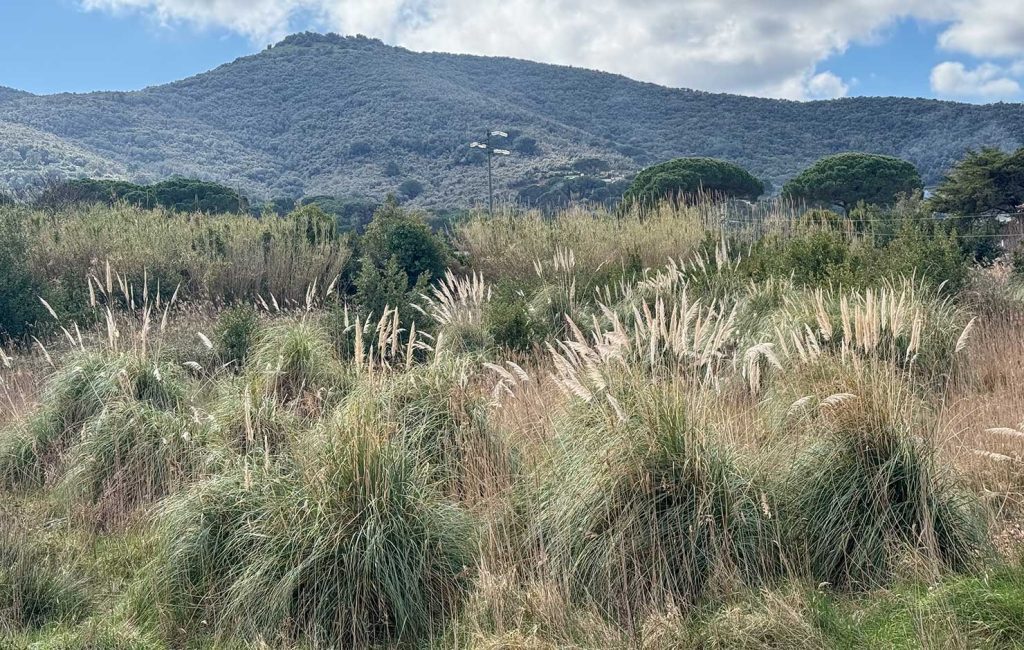
Mauritanian grass is a grass, a perennial herbaceous plant. It is a typical tufted plant, meaning that it forms compact clumps comprising stems, leaves, and flowers that derive from a single root or are otherwise closely joined, with dense, uniform growth. In Italy it is known as “tagliamani” literally “cut hands” because they are up to one meter long and sharp at the edges. The inflorescence is a panicle curved at the apex. The spikelets are solitary and bear 2-5 flowers each. The habitat of the tagliamani includes garrigue, scrubland, arid and rocky places. This plant has a great capacity to recover after fires and therefore quickly colonizes land subjected to fire. On abandoned terraces, it creates extensive cover, effectively retaining the soil and preparing it to host more demanding plants. The part of the botanical name that refers to the genus (Ampelodesmos) is composed of the Greek words for vine and bond, as in ancient times it was used to tie vines. The plant’s particularly resistant culms (stems) were used to make baskets and tools for sifting semolina and flour, while the leaves were used to obtain a fibrous material with which ropes and mats were made.
🌿 Botanical Information