

Myrtle
Myrtus communis L.
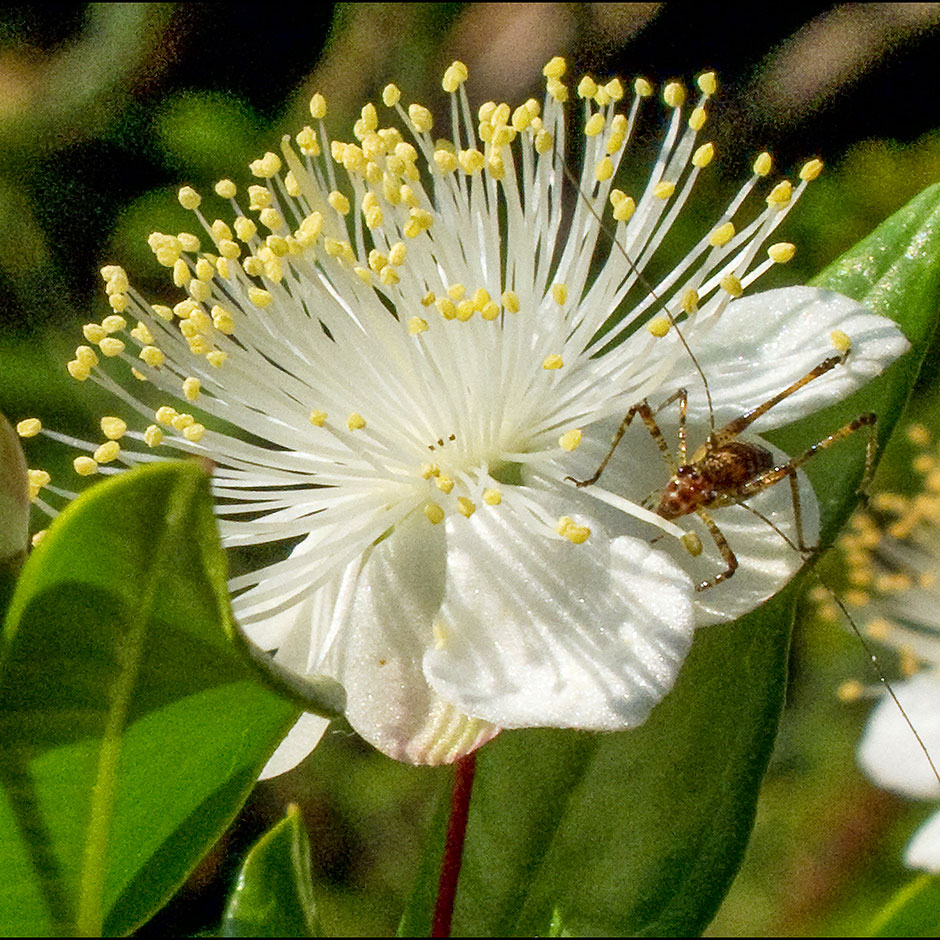
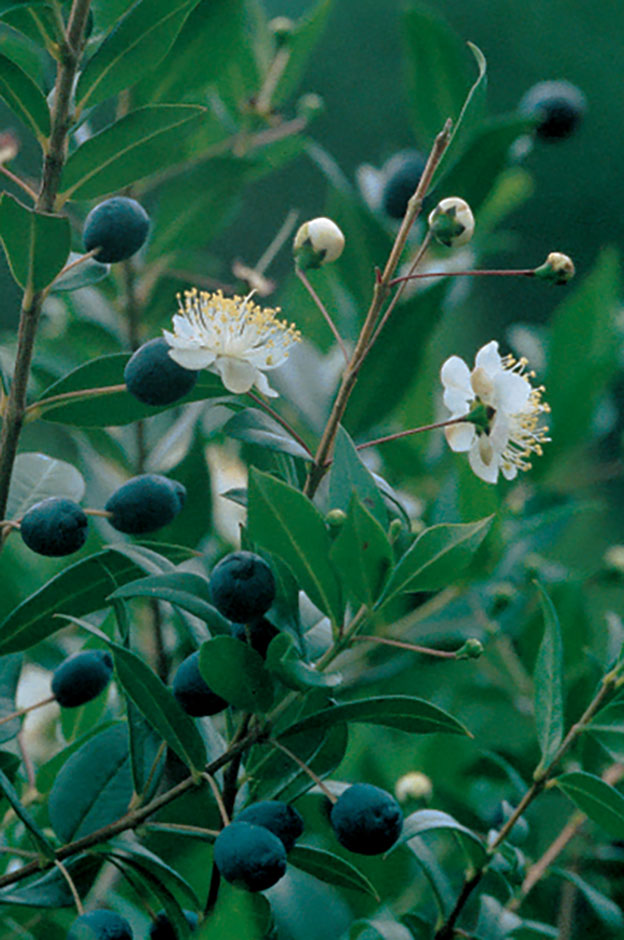
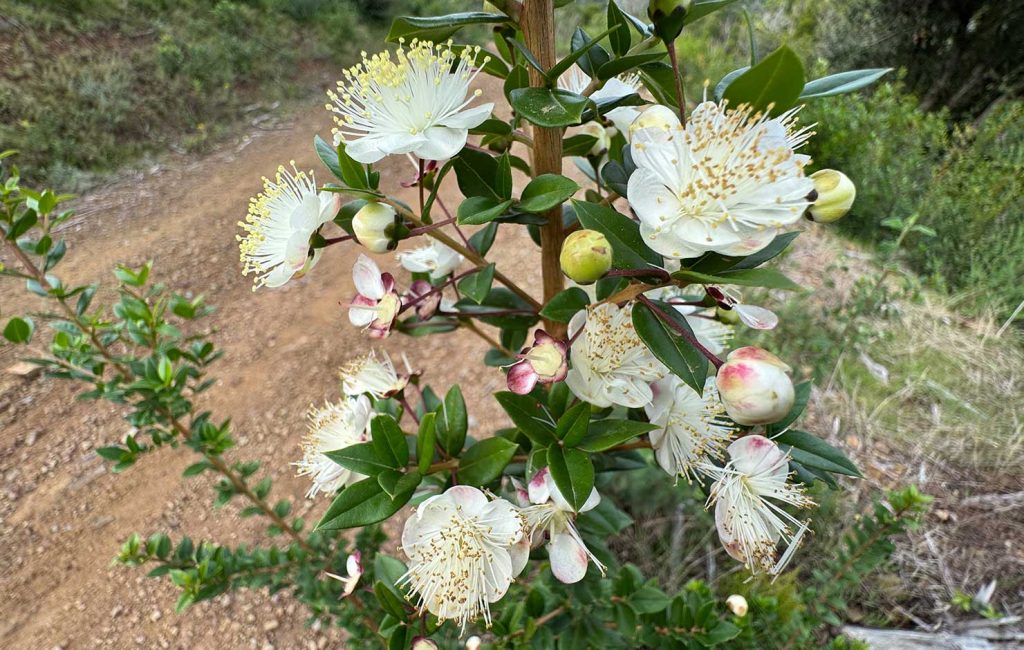
In mythology, myrtle is the plant symbolising victories achieved without bloodshed, female goddesses such as Ishtar, Artemis, Turan and Aphrodite, fertility and eros (Pliny’s “myrtus coniugalis”), but above all female warriors, Amazons such as Myrsìne, Mirìne and Myrtò, and the prophetess Myrtìla. This evergreen shrub with an aromatic, resinous scent and dense foliage has crowned famous heads. The leaves have a sharp but not prickly tip; their shine is an adaptive feature designed to deflect some of the sun’s rays, thus reducing sun damage. When touched, the leaves emit a pleasant orange-like scent due to the presence of myrtenol. The flowers are solitary and have an intense fragrance. In late autumn, when the plant already has berries, a second flowering may occur, and then flowers and fruits will be present on its branches (as in the photo). The fruits are used to flavour certain foods and to make myrtle liqueur. The plant contains essential oils, aromatic substances and other phytotherapeutic substances used to treat various disorders; it is also used in perfumery and in the preparation of soaps and cosmetics. The younger branches were used on the Island to weave baskets.
🌿 Botanical Information