

Mulberry Grove
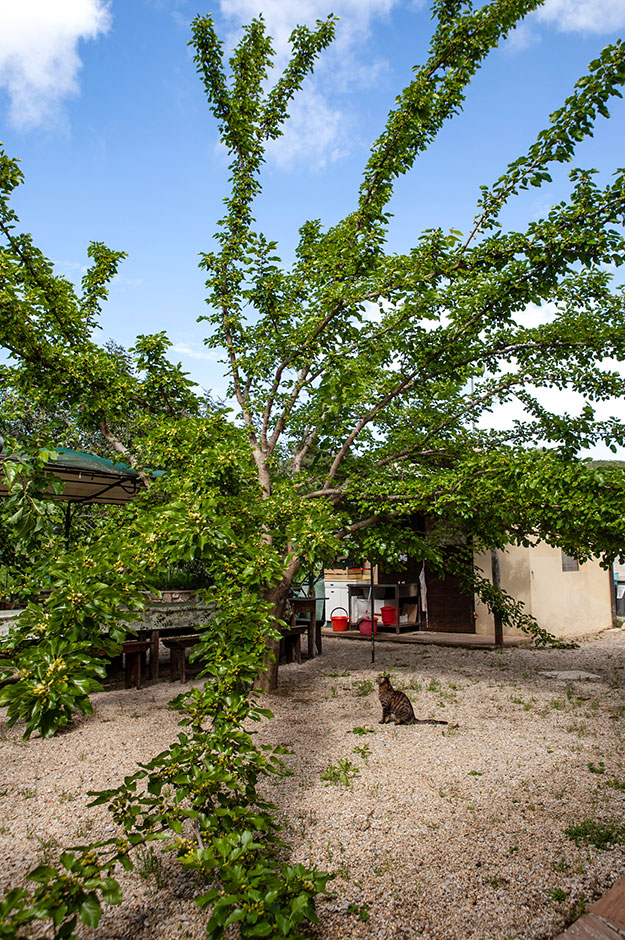
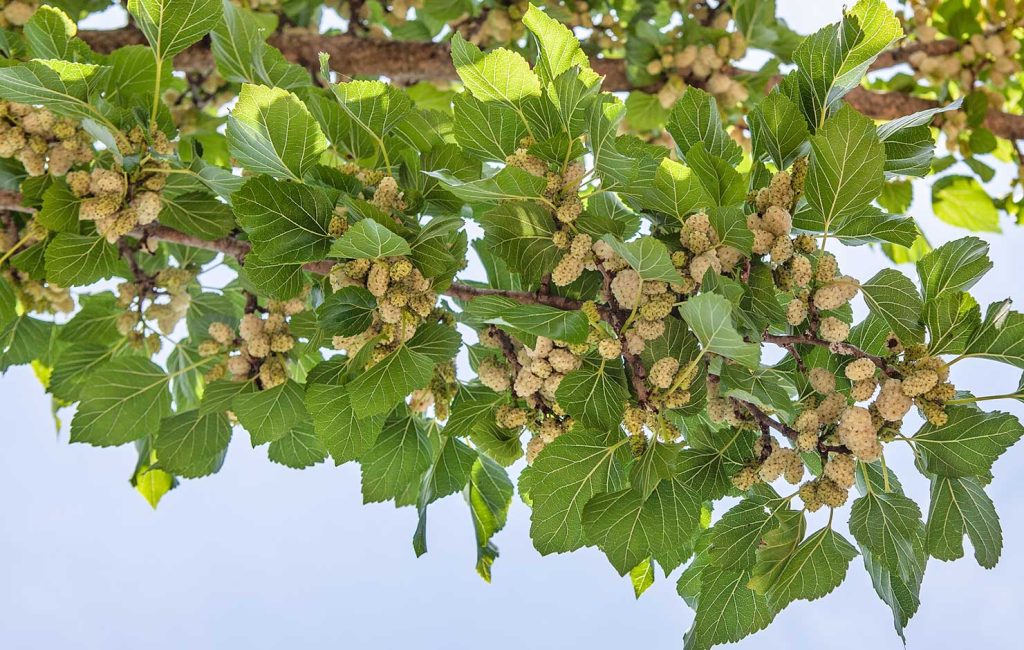
Orti di Mare has always been dedicated to growing mulberry trees, but in 2025 we finally planted a full-fledged mulberry grove consisting of 40 young trees—including white, red, and black varieties—spanning 12 different cultivars. We will have flavorful, colorful fruit to harvest in stages, which will also be greatly appreciated by birds and insects. Humans began cultivating the mulberry tree 6,000 years ago in East Asia, but it only became famous in Europe millennia later due to the lucrative trade that traveled along the “Silk Road,” which led from China to the Mediterranean, Greece, and ancient Rome. To produce the precious silk thread, silkworms feed on mulberry leaves, hence the plant’s importance. Since the 15th century, Tuscany has been one of the regions with the most extensive cultivation of mulberry trees for silkworm farming. The black mulberry (Morus nigra), but especially the white mulberry (Morus alba), were part of the agricultural landscape until the mid-20th century, planted along the edges of cultivated fields and beside canals and ditches. Farmers raised silkworms in the attics of their homes and then sold the cocoons to spinning mills. The beneficial properties of the mulberry tree, especially the black mulberry, were already known to Pliny the Elder, Ovid, and other classical authors; more recently, various compounds with hypoglycemic, expectorant, astringent, and refreshing properties have been identified.
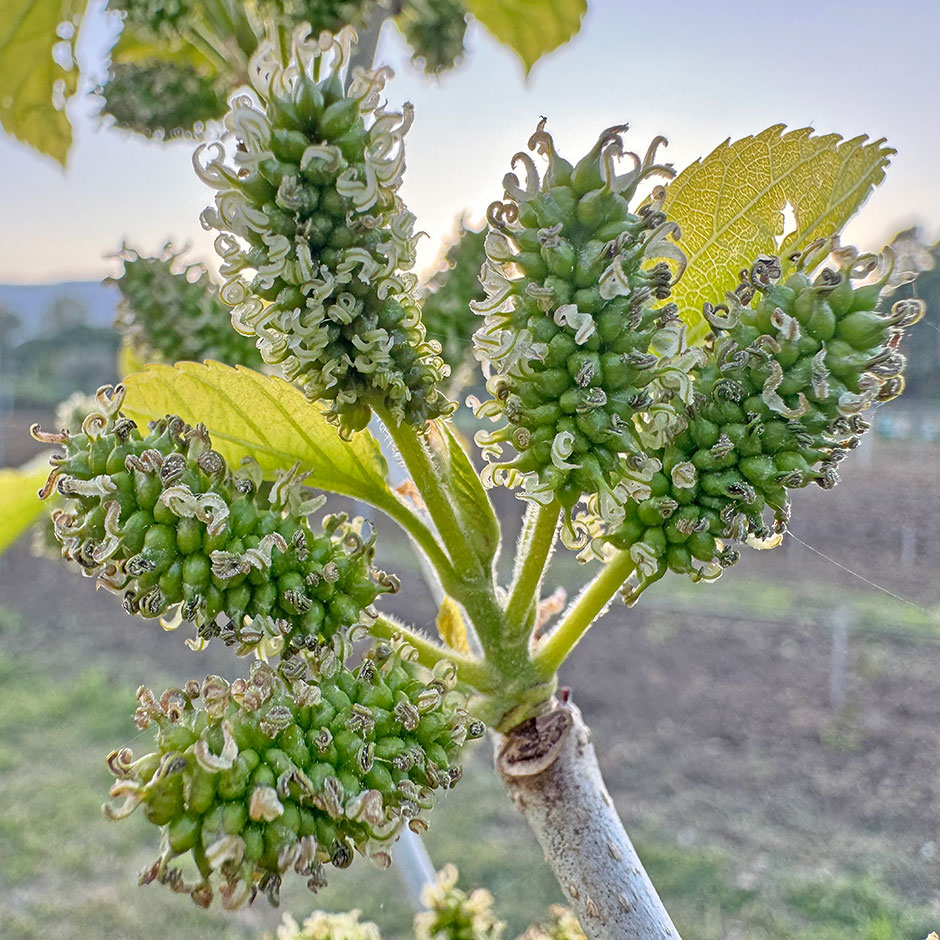
Recent research has yielded surprising preliminary findings: the flowers of Morus alba are champions of speed; in fact, they expel pollen by releasing the elastic energy stored in the stamen in less than 25 microseconds—a speed exceeding half the speed of sound, making it the fastest movement currently known in the plant kingdom.