
European ivy
Hedera helix L. subsp. helix
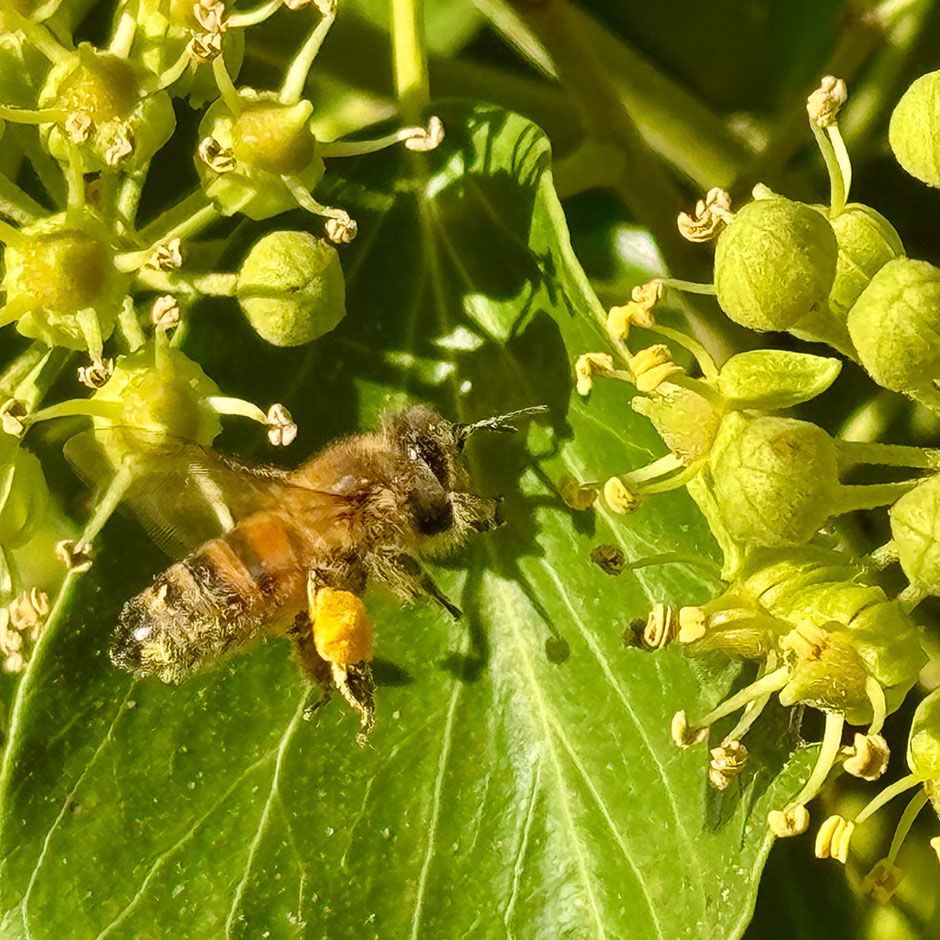
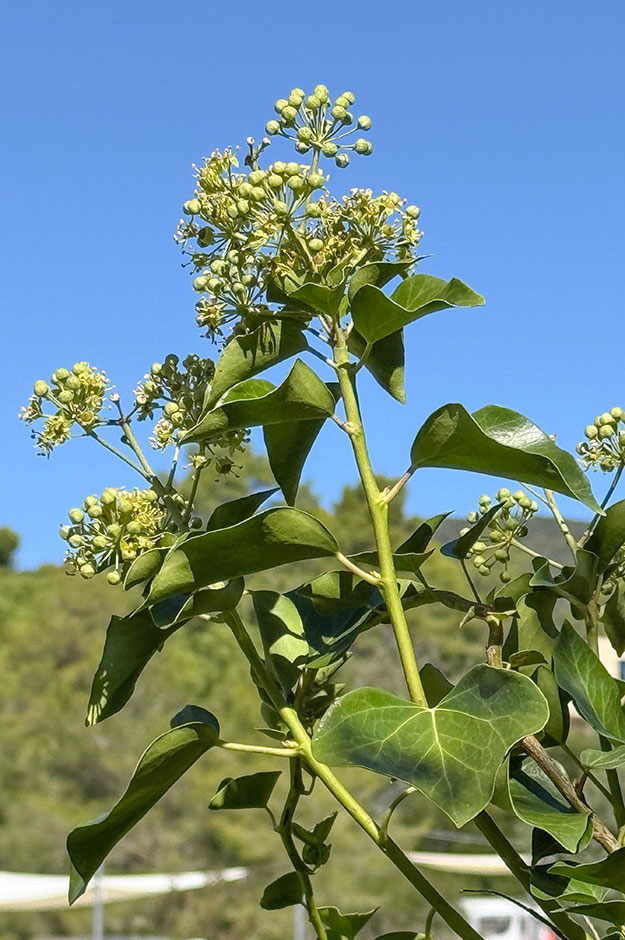
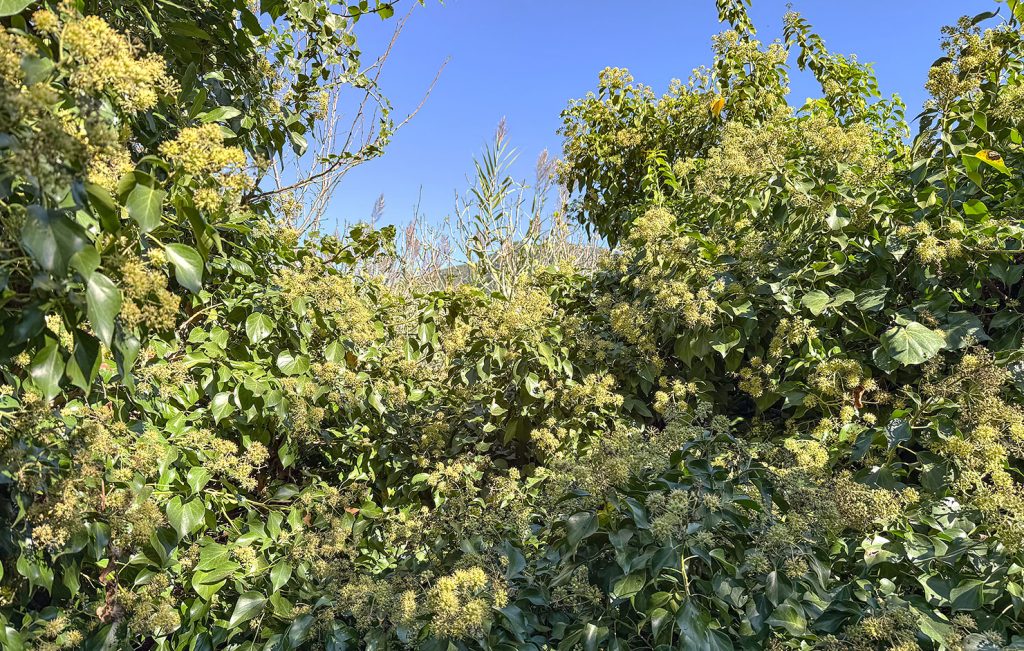
Ivy is not a parasite but a species that plays a key role in the dynamics of a natural forest. It does not feed on the sap of the plant that hosts it, but simply uses it as a support, clinging to it without preventing its photosynthetic function and acting as a sort of insulation for the trunk. Ivy, with its weight, causes compromised plants (diseased, at the end of their life, etc.) to fall to the ground sooner, thus promoting the forest renewal process. It can become invasive in forest environments that have been disrupted by human activity, where it sometimes needs to be actively controlled. The plant also provides food, shelter, and nesting sites for various species of birds, with its berries being particularly valuable during winter when food sources are scarce. NASA has determined that it is an anti-pollution plant, as it absorbs relevant quantities of benzene and trichloroethylene. This climbing, evergreen, and ubiquitous shrub has nectar-rich inflorescences and is therefore very popular with bees. The leaves and fruits are poisonous. For this reason, when ungulates feed on them, it is a symptom of the ecological imbalance between available plant resources and trophic pressure (typically in the absence of natural predators such as wolves).
🌿 Botanical Information