

Montpellier Broom
Genista monspessulana (L.) L.A.S.Johnson
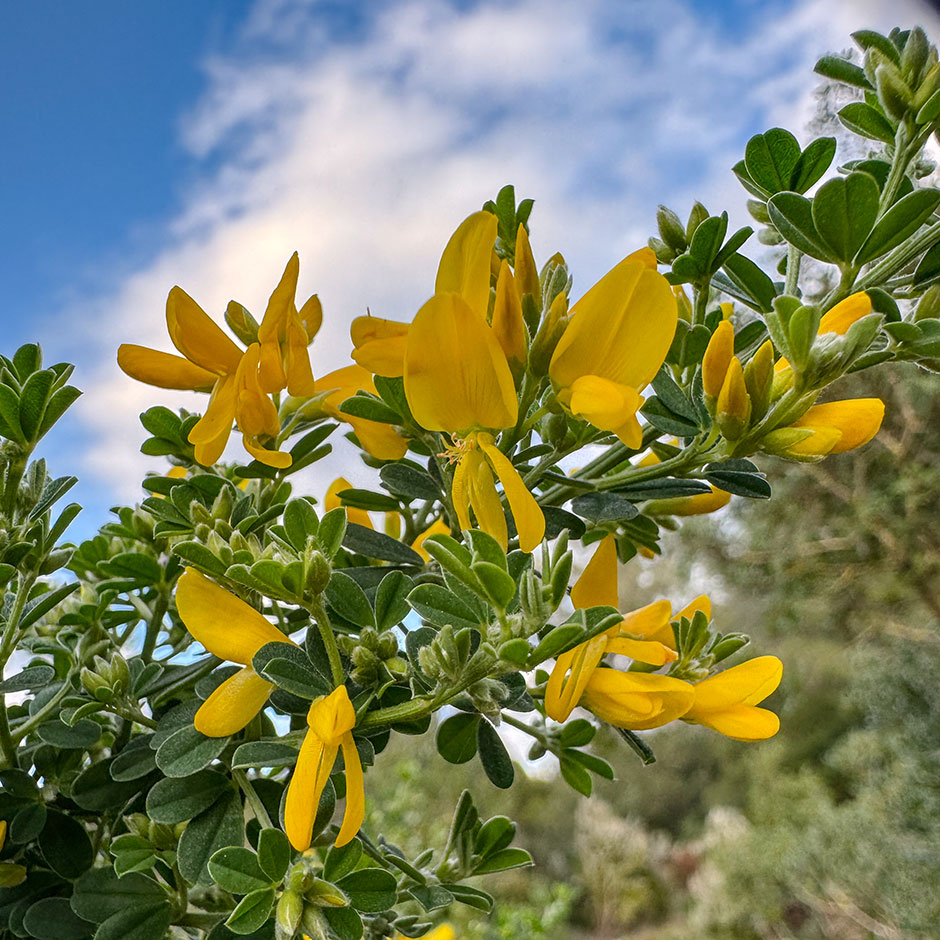
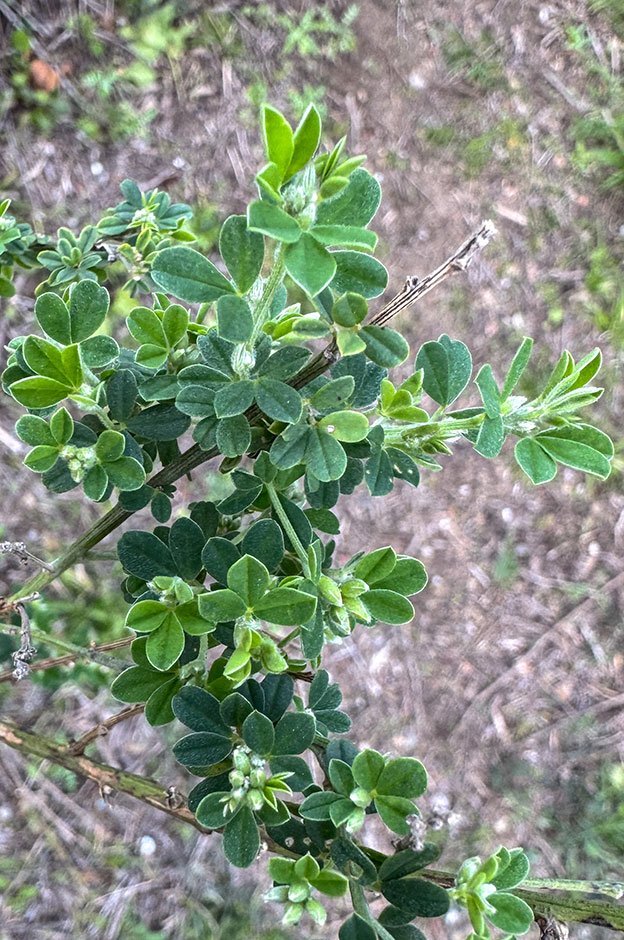
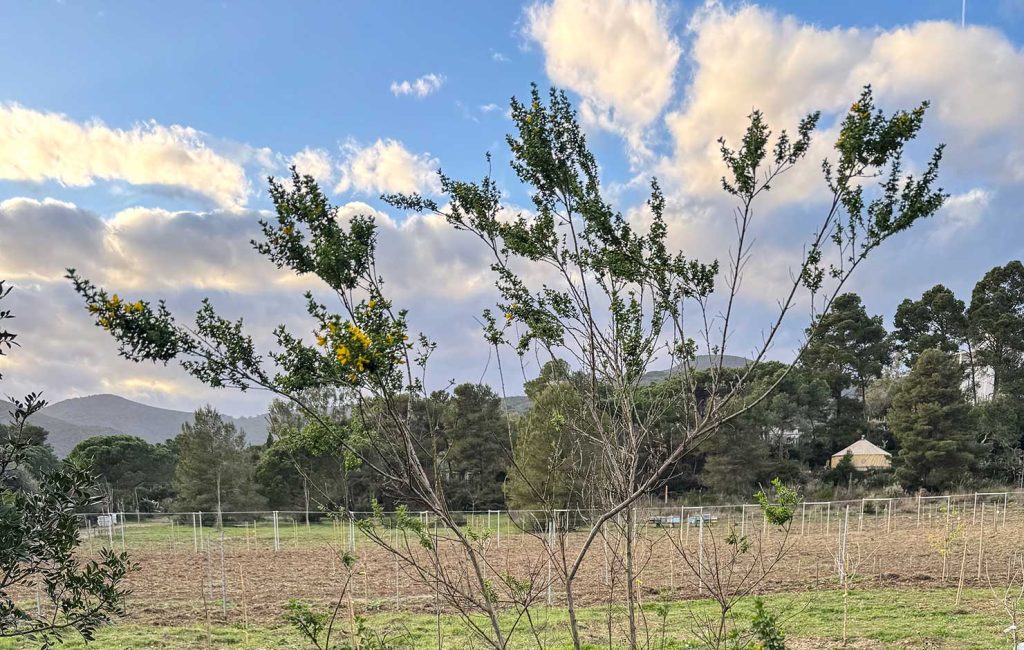
The Montpellier Broom is a bushy plant with an upright habit, growing to between half a metre and just over 2 metres in height. It grows on the edges of holm oak woods and scrubland. The branches are striated, the young ones are pubescent and the leaves are trifoliate and petiolate. The inflorescences are short corymbs composed of up to 4-8 flowers. The legume is pubescent. The plant is common on the Tyrrhenian coast, less so on the Adriatic coast. Although this broom is exuberant in Italy, it does not invade the territory, whereas it has become a problem in several countries where it has been introduced. In Great Britain, it was already present in 1735 as a cultivated plant. Introduced as a garden plant, it then became wild and, thanks to its generous seed production (10,000 per season) and its ability to regrow after cutting and fires, the plant is highly invasive in certain habitats in Australia (600,000 hectares), on the west coast of the United States and in other countries where it forms dense fields in which other species are overwhelmed. Among the positive effects of the plant are that it fixes nitrogen and increases soil fertility. In Sardinia, it has some limited uses as a traditional medicine.
🌿 Botanical Information