

Italian cypress
Cupressus sempervirens L.
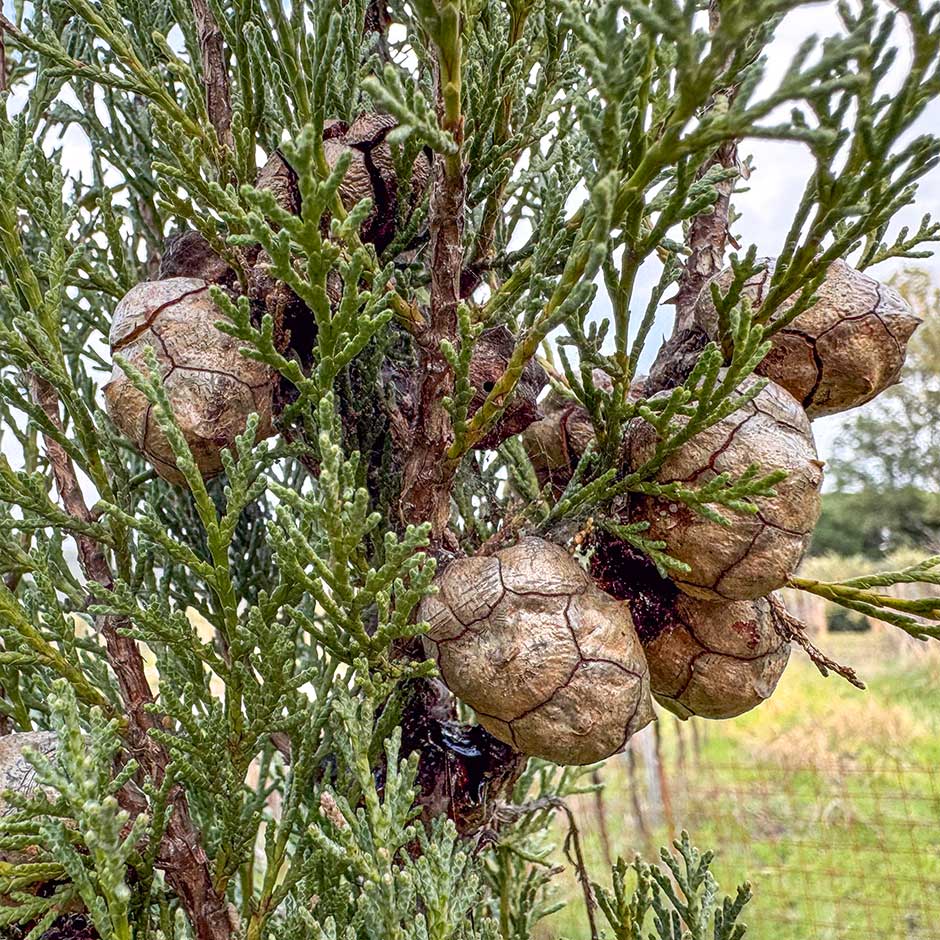
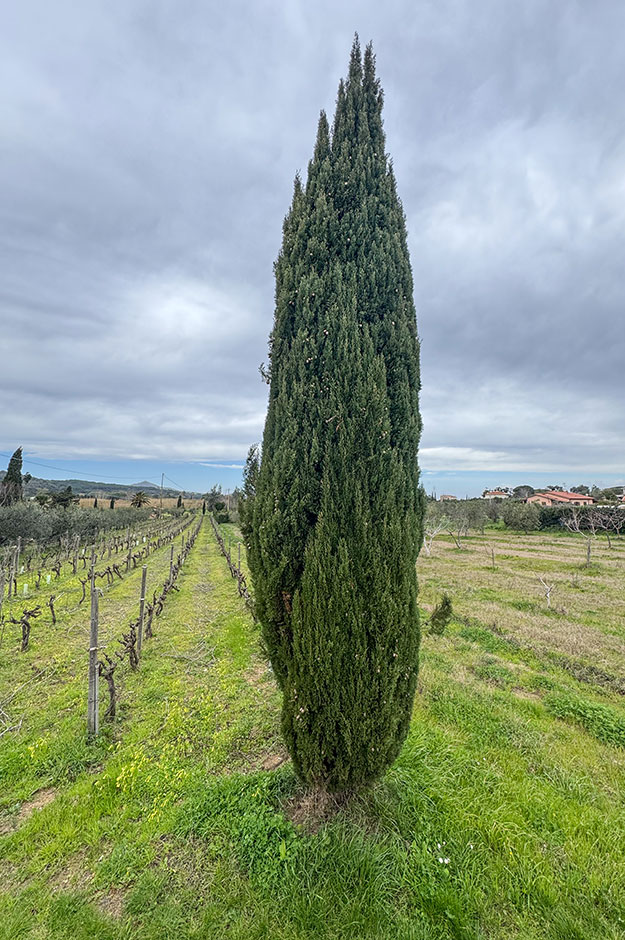
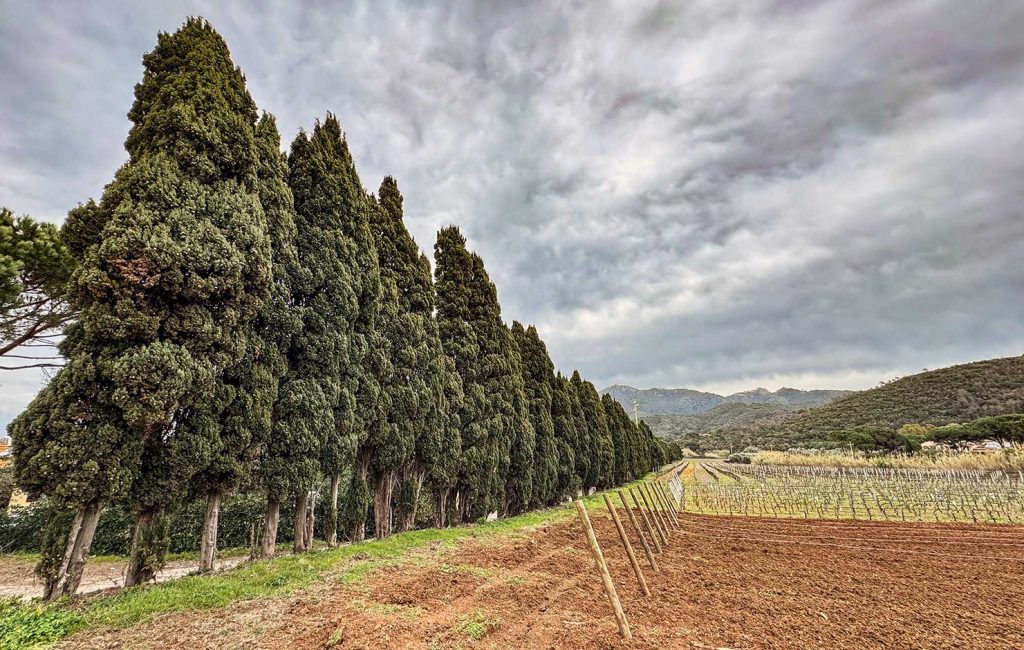
A particularly long-lived conifer, one that grows rapidly, it can grow up to 30 metres tall. Native to the eastern Mediterranean, the cypress was brought to Italy by the Etruscans or even the Phoenicians. It is found growing wild or cultivated mainly in Tuscany where, together with the olive tree, it determines the appearance of the landscape. The crown can be tapered and pyramidal or disordered and tendentially globular in the case of the horizontalis variety, known as the female cypress. It has always been used for windbreaks. The wood, which is hard and compact and resistant to insects, has a persistent and pleasant smell and is highly sought after for the construction of furniture and fixtures. A fungal disease related to Seiridium cardinale causes desiccation with serious repercussions on the species and lacerations in the landscape. Preparations used in the pharmaceutical and perfumery industries are obtained from cypress. It is naturalized on Elba only in the Monserrato valley; elsewhere it is usually found on private property, in gardens, along roadsides and in cemeteries. The funerary fame of the cypress began with the Greek and Roman poets, and its roots, which descend vertically rather than spreading horizontally, do not interfere with burials.
🌿 Botanical Information