

Hawthorn
Crataegus monogyna Jacq.
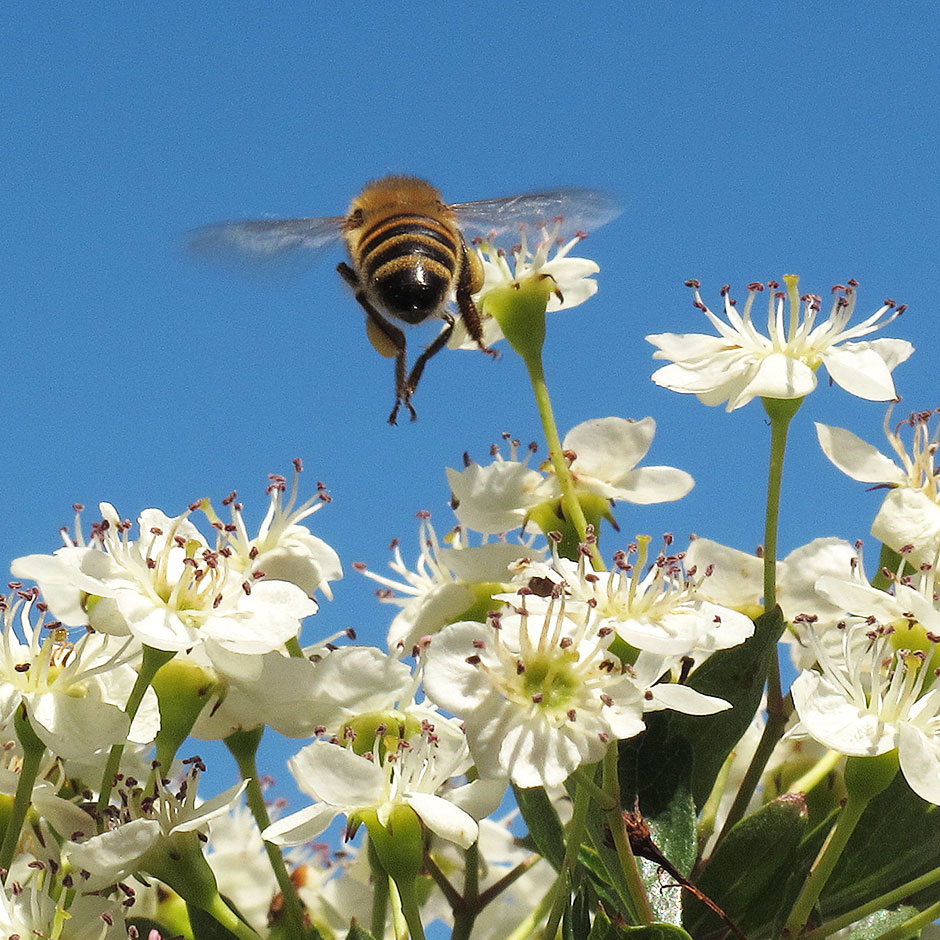
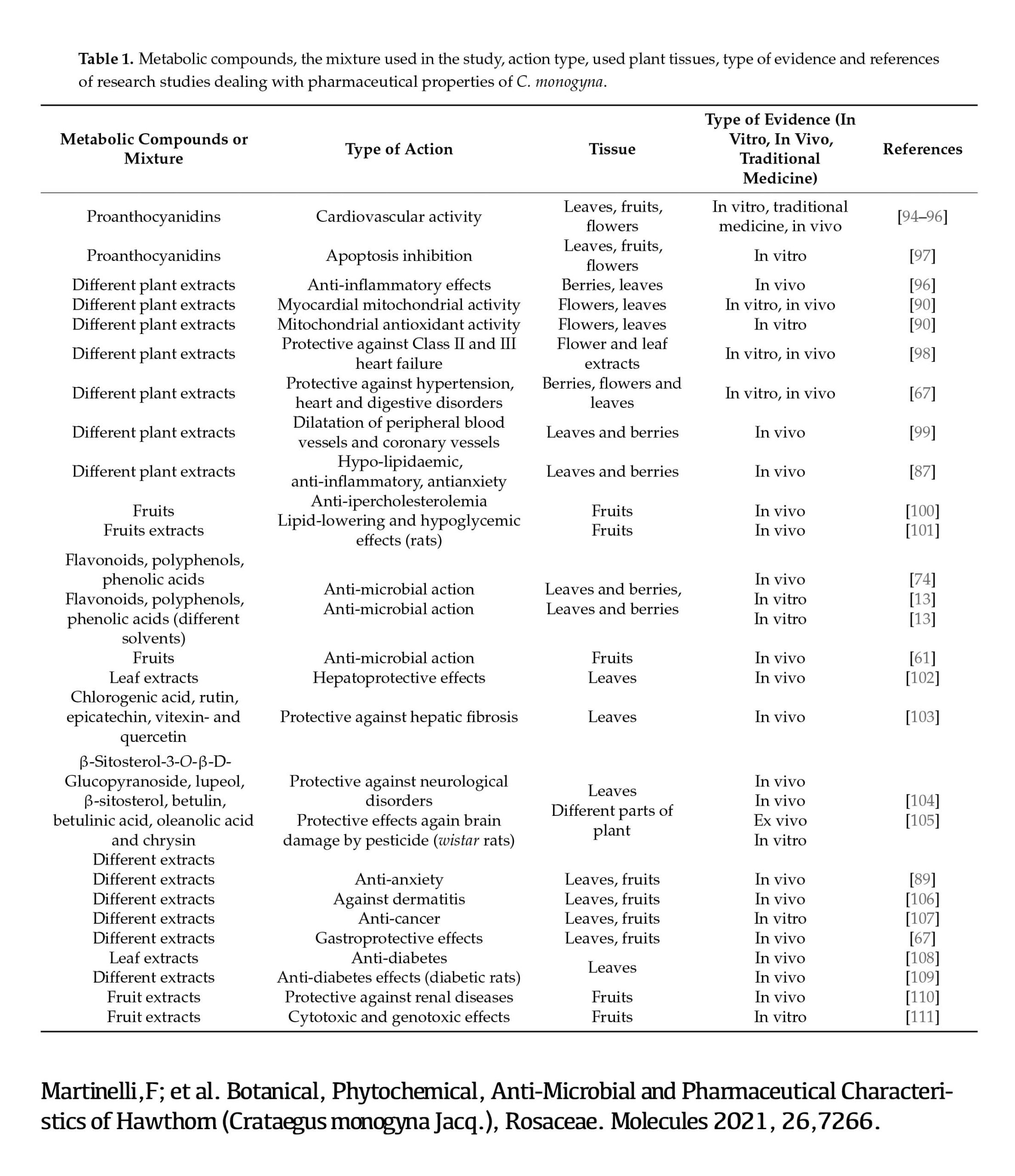
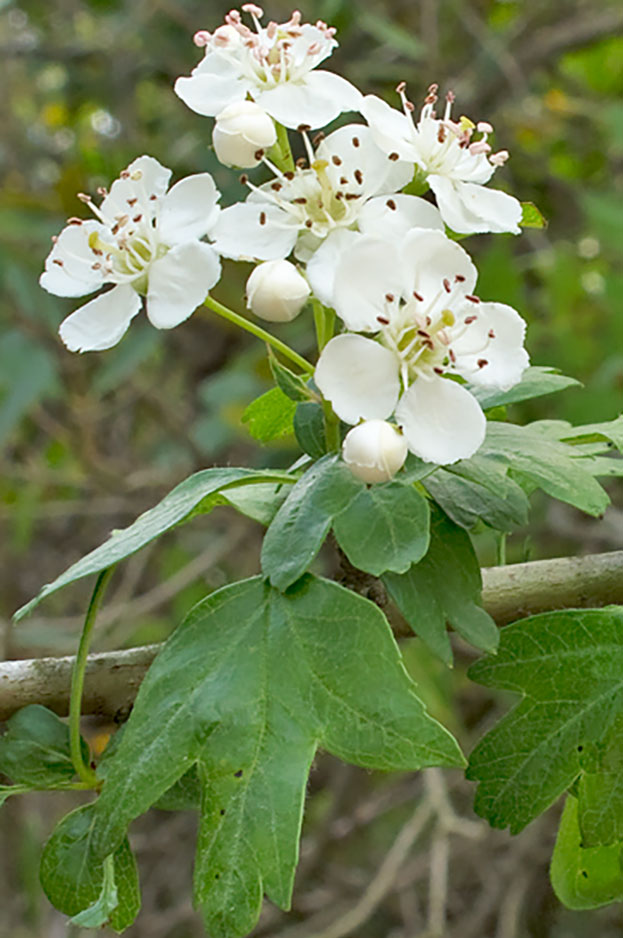
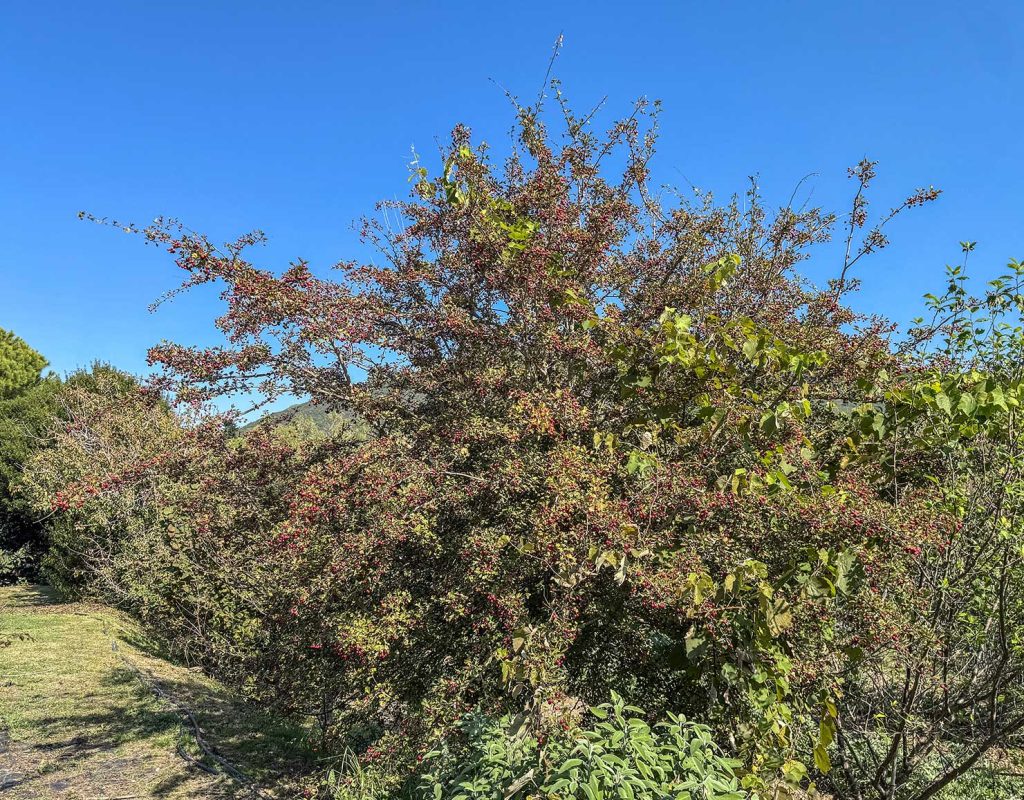
Hawthorn can be found along paths as a small tree or bushy shrub. In winter, it loses its leaves and reveals twigs that often have sharp thorns. The plant is easily recognizable by its white flowers clustered in corymbs, its red fruits (actually false fruits not developed from the ovary) clustered in dense bunches, and its distinctive lobed leaves. The fruits are used in cooking for fermented drinks and jams. The seeds have been found in Neolithic sites, while their therapeutic use has been documented since the 12th century. Extracts obtained from the leaves and flowers are a true phytomedicine containing active compounds such as quercetin, proanthocyanidins, crategolic acid and others. The effects of these extracts have been extensively studied and include a series of positive actions on the heart, circulation, blood pressure and central nervous system as a sedative. For the ancient Greeks, the plant was a symbol of hope, marriage and fertility; in Christianity, however, it was associated with death and misfortune (Christ’s crown of thorns was made of hawthorn). During the French Revolution, it underwent another symbolic transformation and became the “tree of liberty”.
🌿 Botanical Information
Information photo