
Judas tree
Cercis siliquastrum L. subsp. siliquastrum
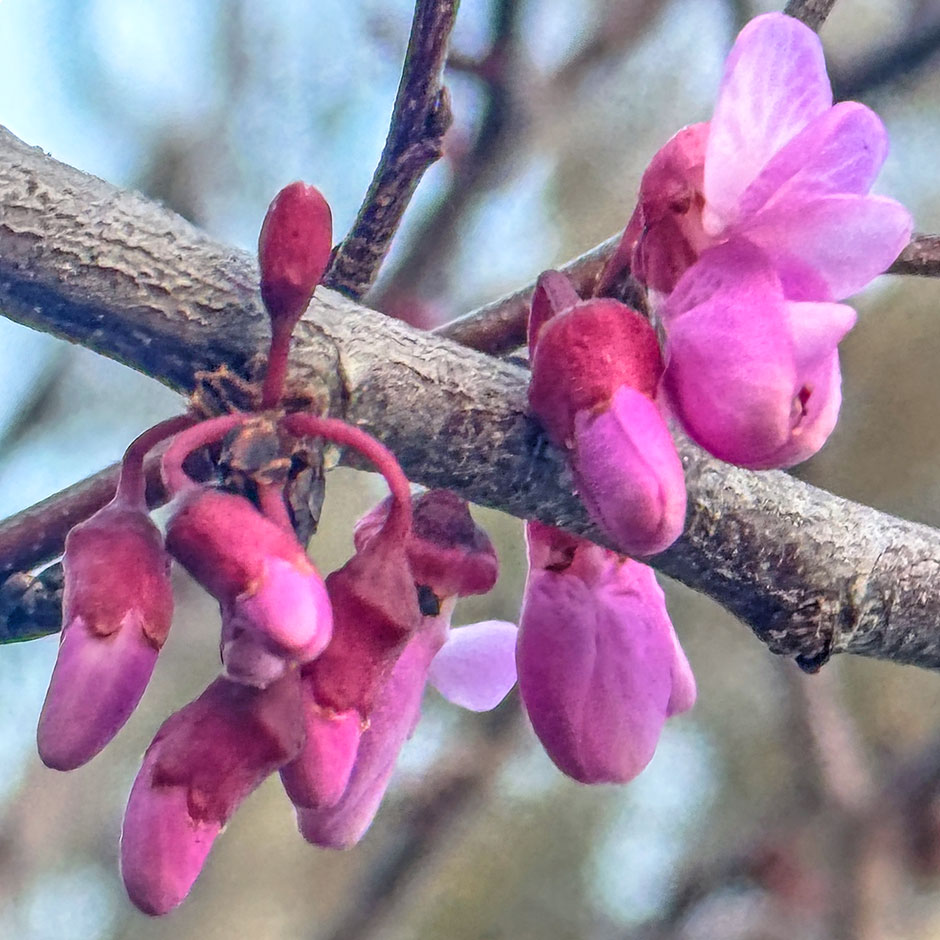
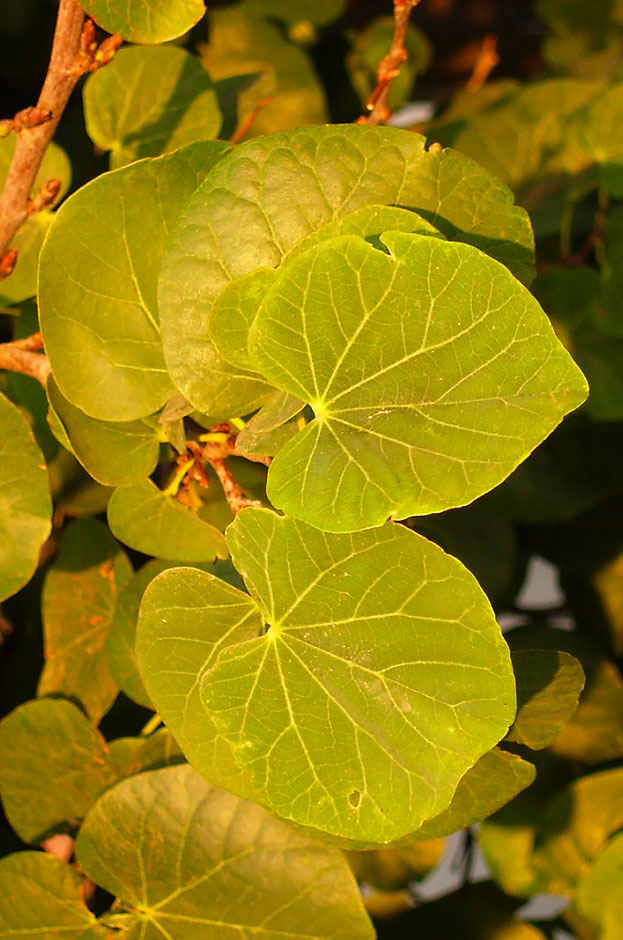
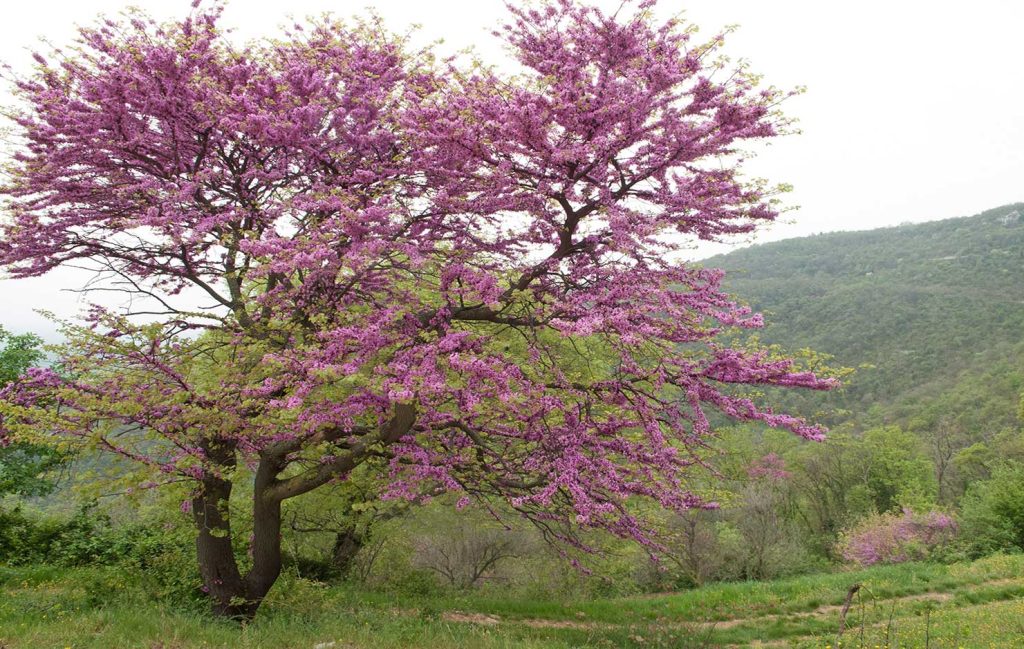
The Cercis siliquastrum is also known as the ‘Judas tree’ because it is said that Judas hanged himself from it after his betrayal. It usually grows as a fast-growing sapling. Its flowering is surprising because flowers grow directly from the bark of branches and trunk and they bloom just before the leaves appear, thus completely covering the tree in purple-pink. The flowers are melliferous and the seeds are floury and nutritious. The heart-shaped or kidney-shaped leaves are particularly pretty. The fruits are long, flattened pods called siliques. The wood is hard, finely grained and not very heavy, and is particularly used for inlay work and other purposes. The tree grows wild in the Mediterranean. According to botanists, it is native to central Italy, in the Tivoli area (where it survived the Würm glaciation), from where it then spread. ‘Cercis’ derives from the ancient Greek “kerkis” (shuttle) with reference to the shape of the fruit, while the specific name (siliquastrum) derives from the Latin “siliqua” with reference to its elongated shape. On the island, it is found on the slopes of the Gulf of Procchio and here and there in single or groups of specimens, almost always planted by man.
🌿 Botanical Information