

Aleppo Pine
Pinus halepensis Mill.
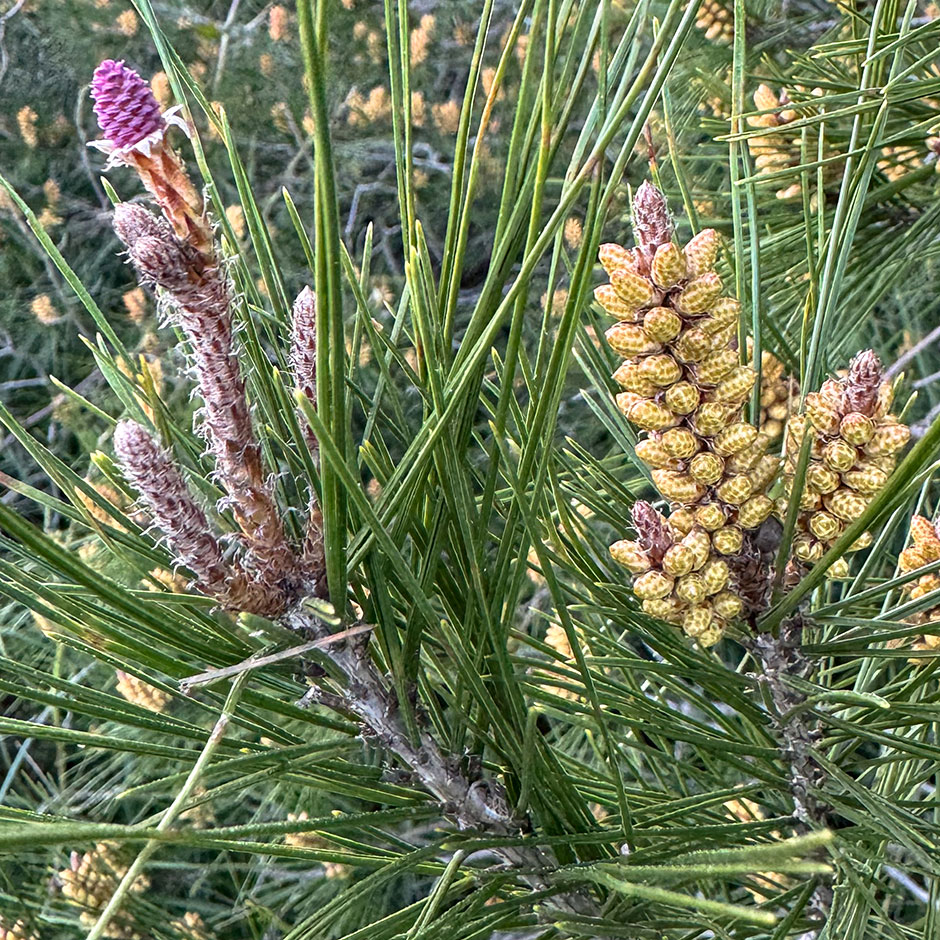
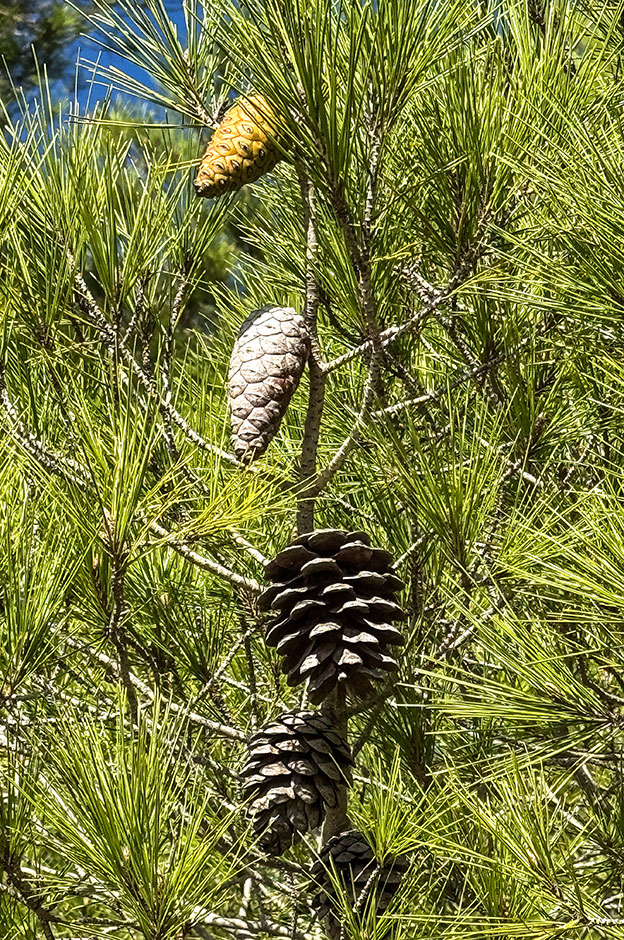
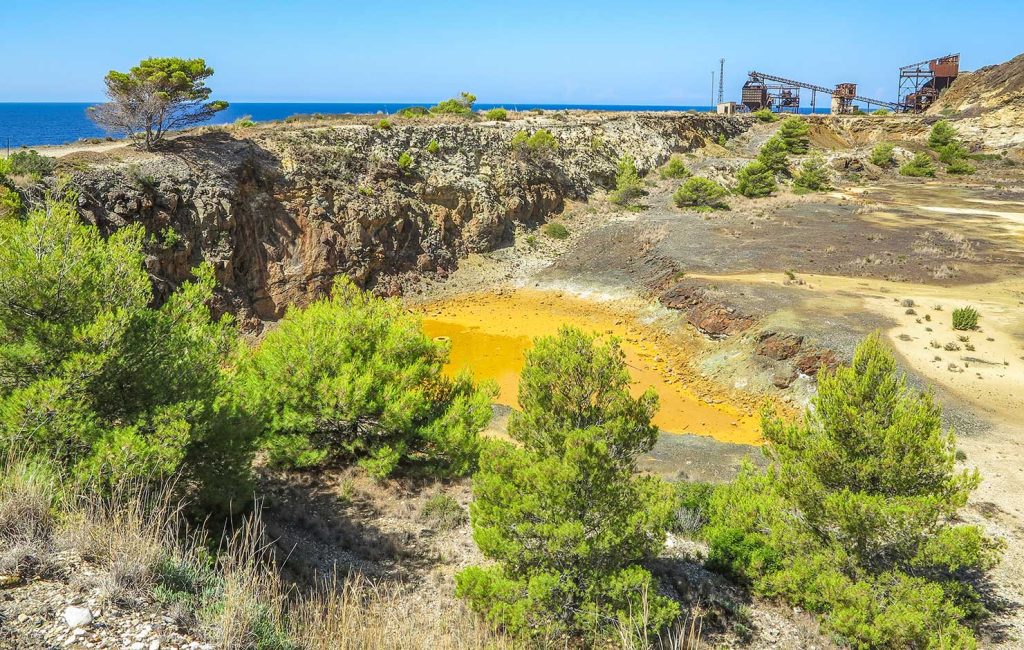
This pioneer and frugal conifer, resistant to drought and salty winds, effectively colonizes calcareous soils affected by fire and is widespread in the Mediterranean coastal area. The crown and therefore the appearance of the Aleppo pine change with age: pyramidal in young specimens, it tends to become globular and expansive over the years, most often maintaining irregular and disordered features. The male inflorescences are grouped in yellow cones, while the female ones are brown-purple in color. It can be distinguished from the domestic pine in that its conical pinecones are anchored to the tree by a short peduncle curved downward. The wood is not particularly valuable but is resinous, durable, and compact, and is therefore used in construction, packaging and shipbuilding. Aleppo wood was used for pile dwellings and mine shafts, and it was used to build the two Roman ships of Caligula, which were found in good condition in Lake Nemi, in Lazio. In some countries, the resin is used to flavor and preserve wine, to extract turpentine essence, or for food preservation. Suitable for poor soils, it grows quickly and is therefore used in reforestation and quarry restoration, such as in Colle Reciso, which overlooks the watershed between Lacona and Portoferraio.
🌿 Botanical Information