

Hairy rockrose
Cistus creticus L. subsp. eriocephalus (Viv.) Greuter & Burdet
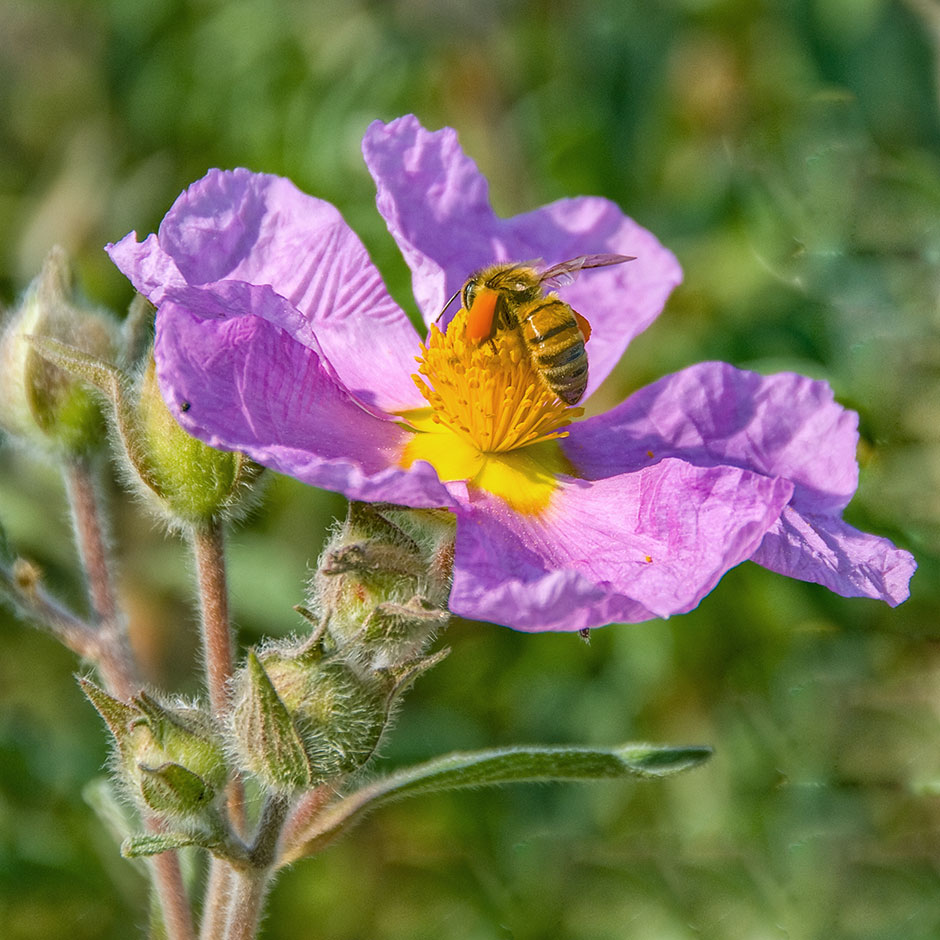
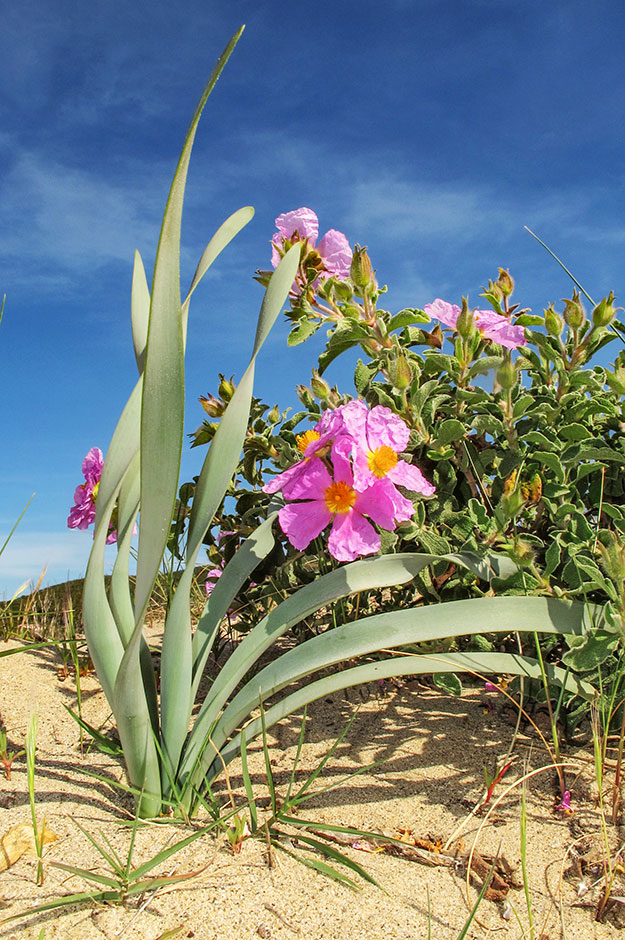
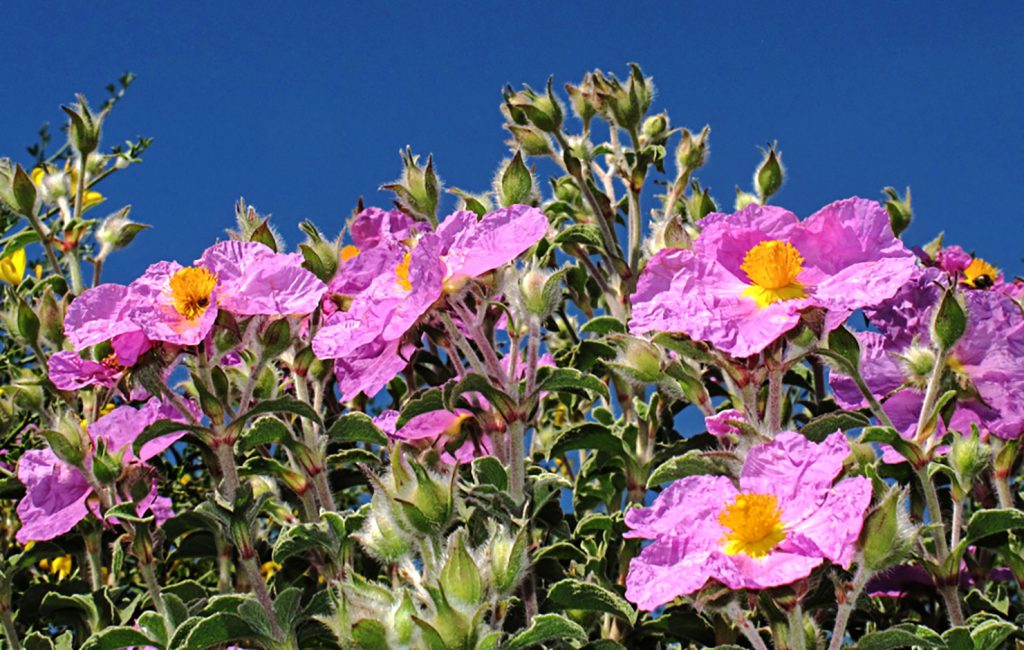
The hairy rockrose (or purple rockrose) is an evergreen shrub 30-100 cm tall with reddish-brown branched stems that are woolly at the apex. Hairs are present in many parts of the plant: there are hairs on the edges of the leaves, on the calyxes and on the terminal parts. This is an evolutionary feature (as an adaptation to hot climates) designed to reflect light and reduce evapotranspiration. In the botanical name, the specific epithet “eriocephalus” is composed of the Greek words “erion”, meaning wool, and “kephale”, meaning head, to refer to its densely hairy capsules. The rockrose loves the sun (heliophyte) and heat (thermophyte). The flowers are melliferous and hermaphroditic, as they contain both pollen (in the stamens) and the reproductive organ (in the pistil); the pollen carried by insects into the pistil (which contains the ovary) fertilises it. Pollination is entomogamous, i.e. it occurs via bees, bumblebees and butterflies. The large, showy petals are deep pink or light purple (sometimes white) and are typically “crumpled”. Its habitat is Mediterranean scrubland, garrigue, and forest edges, often in association with C. salviifolius. It is a colonising plant following the passage of fire (pyrophytic) as seed germination in these cases is 10 times higher than normal.
🌿 Botanical Information