

Oleander
Nerium oleander L. subsp. oleander
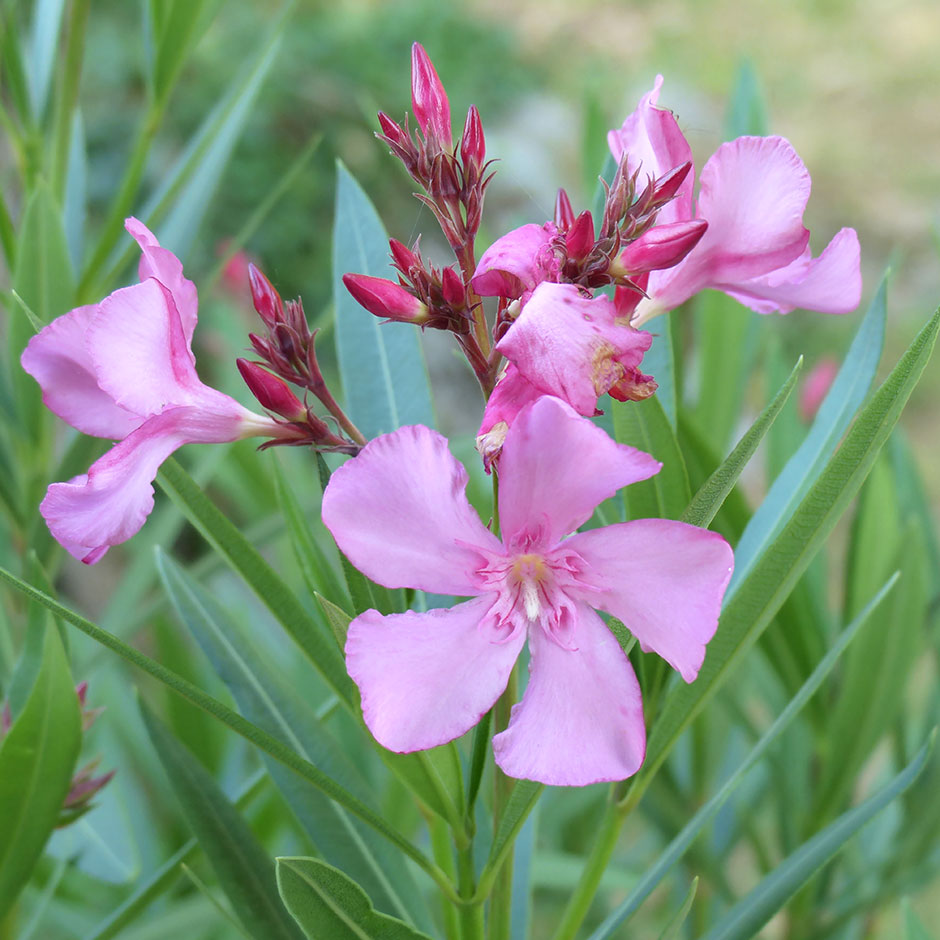
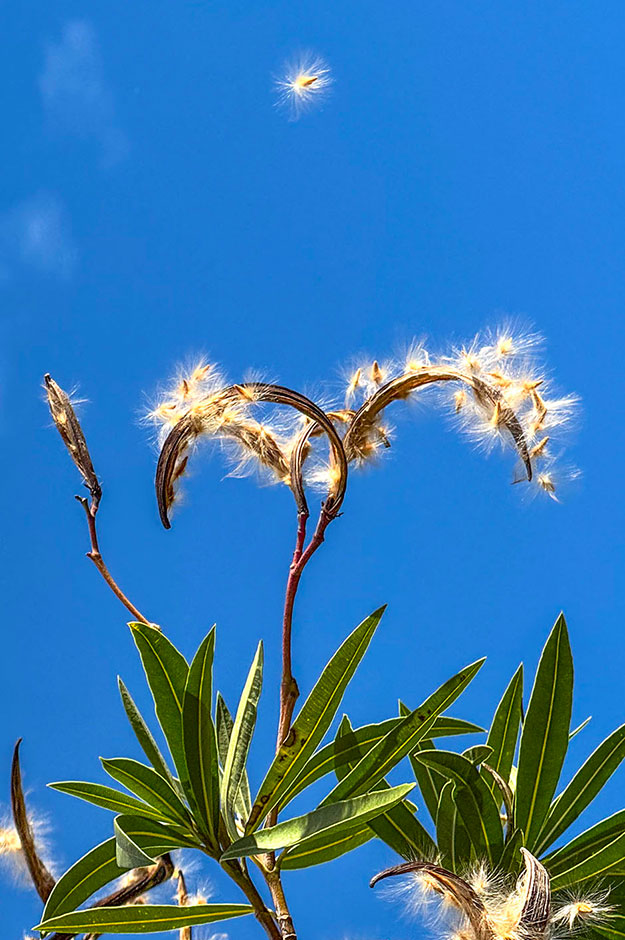
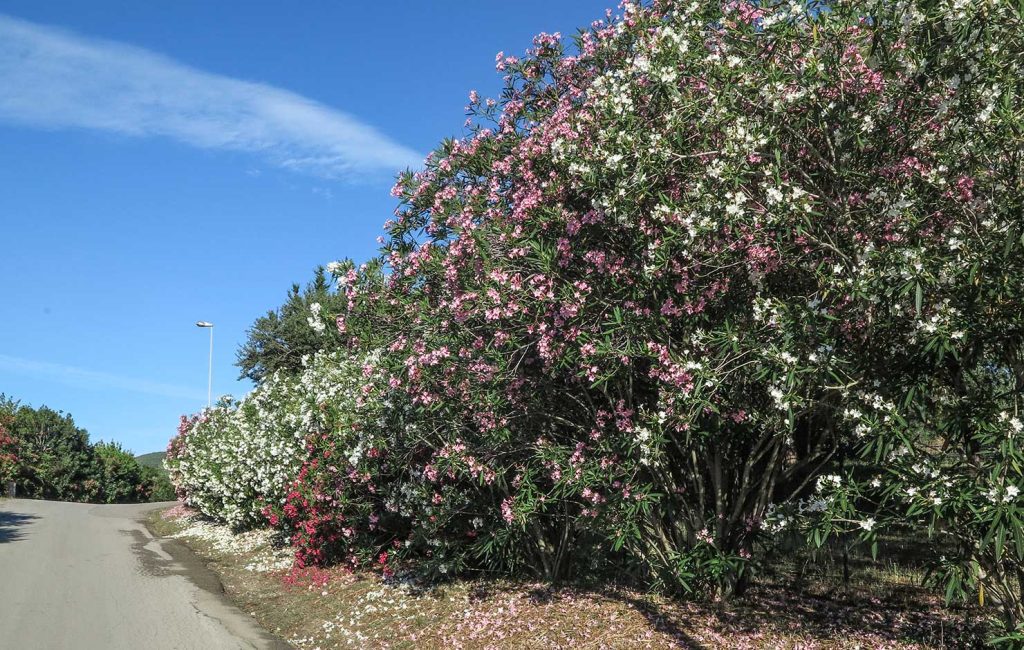
On the Island, oleander is found almost exclusively on the edges of properties as a hedge and ornamental plant and only rarely in the wild because its natural habitats, which are mainly stony ground along the banks of streams and rivers in the Mediterranean, are absent or marginal. It is a shrubby plant and, if not pruned, can reach a height of 6 metres. The leaves have cavities (crypts) covered with hairs to limit transpiration and thus better withstand the dry season. The fruit is fusiform and, when ripe, opens to release densely hairy seeds that are carried by the wind (see photo). Pliny and Apuleius already reported it as very toxic; the plant is indeed poisonous and even mere contact can cause irritation. The fumes caused by combustion can also be toxic. Perhaps because of its toxicity, it has been known since ancient times as a funerary plant.
🌿 Botanical Information