

Italian stone pine
Pinus pinea L.
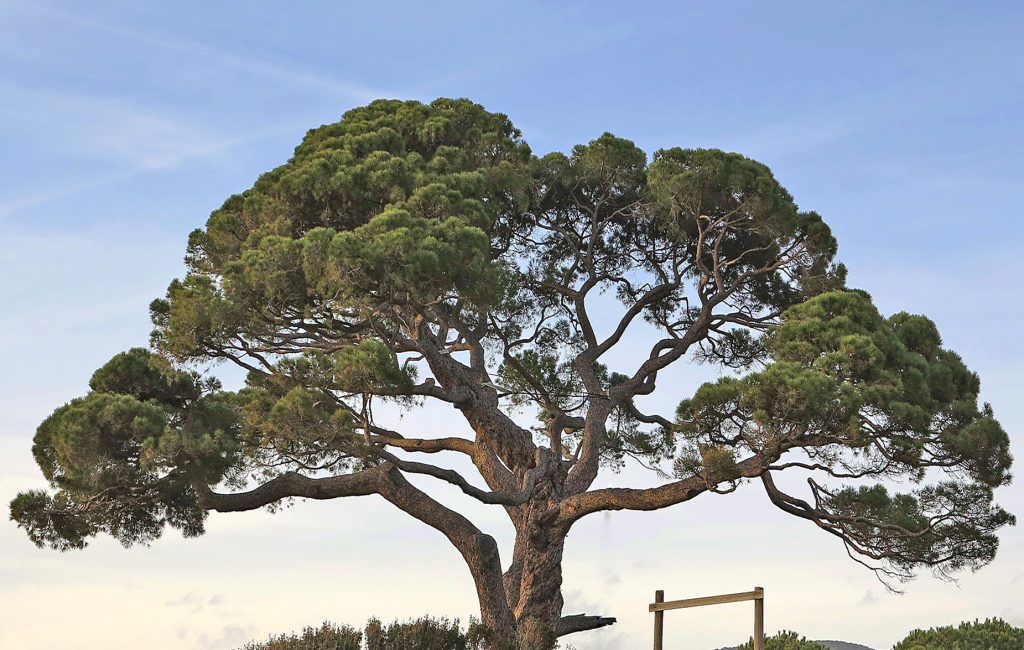
With its characteristic umbrella-shaped crown, its origins in Italy are uncertain, but it is an undisputed feature of the most iconic landscapes. It was widespread in coastal areas as early as Roman times and was widely used in Tuscany during the Renaissance and 19th-century land reclamation projects. Lacona is home to a monumental specimen: the pine tree on the large beach. It can be seen, already impressive, in photographs from the late 19th century and is estimated to have been born in the Napoleonic era. After centuries of vigorous vegetation, it is now in a state of progressive senescence. Orti di Mare is also home to a centuries-old, lush specimen. Between 1932 and 1965, 800 hectares of this pioneer species were planted on the Elban hills as part of the reforestation of slopes degraded by centuries of grazing and fires. The strips of coastal pine forest in Lacona date back to the late 1960s. The pine cones take three years to mature, and the pine nuts used in the preparation of many culinary specialties and desserts are extracted from them. Due to the climatic stress they have recently been subjected to and the unnatural density of past plantations, the pines are affected by Tomicus destruens, a beetle that burrows under the bark until it kills the infested tree.
🌿 Botanical Information