
Spanish Broom
Spartium junceum L.
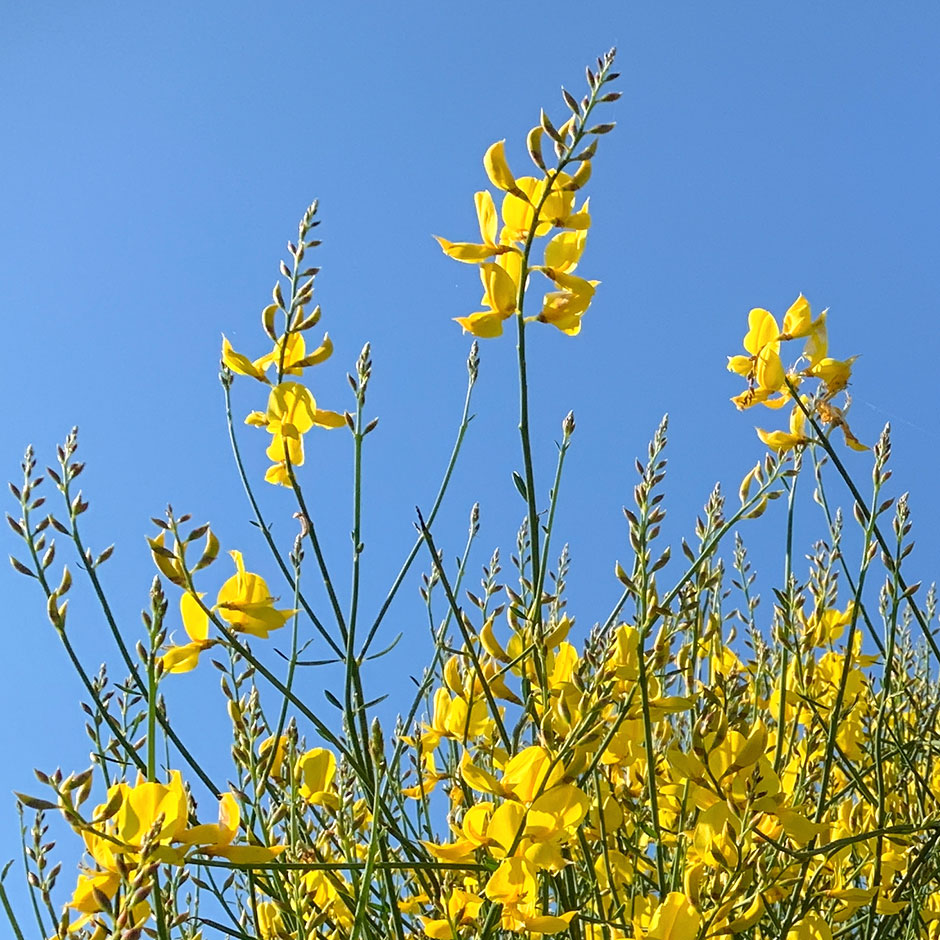
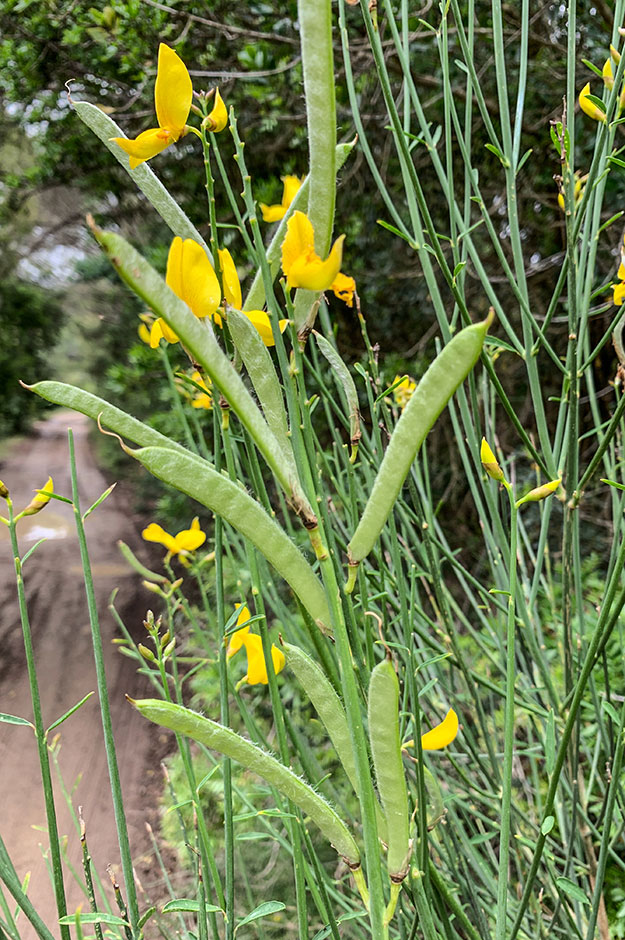
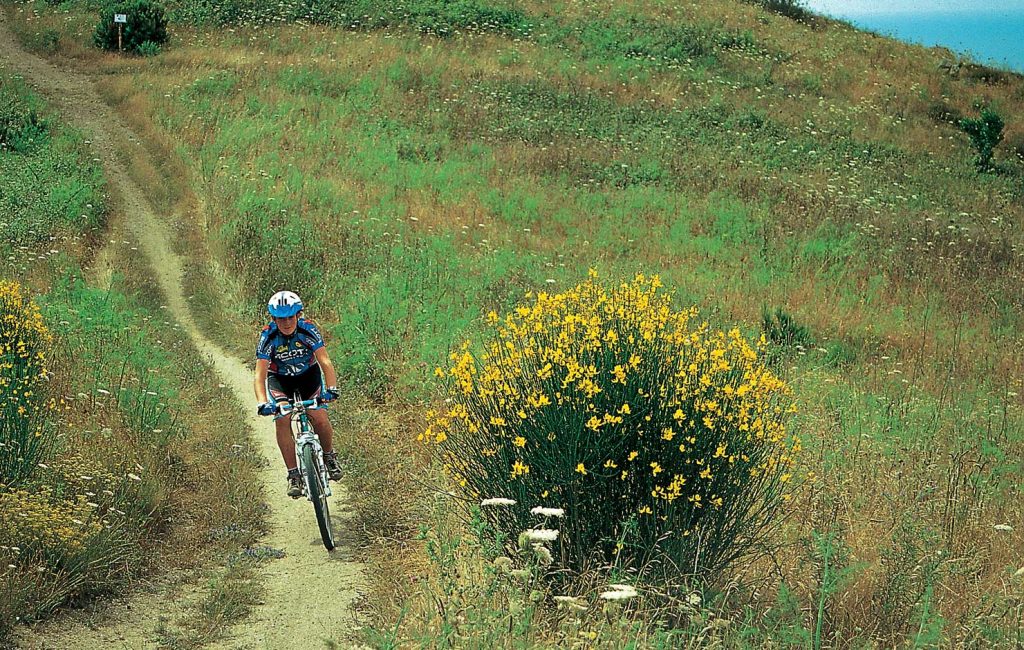
The green branches of the Spanish broom are photosynthetic, capable of integrating and continuing the chlorophyll function of the small, sparse leaves. The plant can grow up to 4-5 metres tall. The flowers are bright yellow, fragrant, distinctive and particularly popular with bees. The fruit is a curved legume, initially velvety and then hairless and dark, which expels 10-18 seeds when ripe. The plant is toxic. It is a beneficial species as it hosts nitrogen-fixing bacteria on its root nodules. The plant has a deep and developed root system, used to consolidate slopes and landslide-prone areas. The name Spartium junceum derives from the Greek word “speïro” (to bind) and the Latin adjective “junceus” (rush-like due to the similarity of the tops of the plant to rushes) and both terms refer to the use made of its flexible stem as a rope for tying vines and tomatoes or for transporting meat. In addition, a textile fibre is obtained from the stem, which is used to produce ropes, and during the Second World War, fabrics were obtained from it to make clothing.
🌿 Botanical Information