

Indian fig opuntia
Opuntia ficus-indica (L.) Mill.
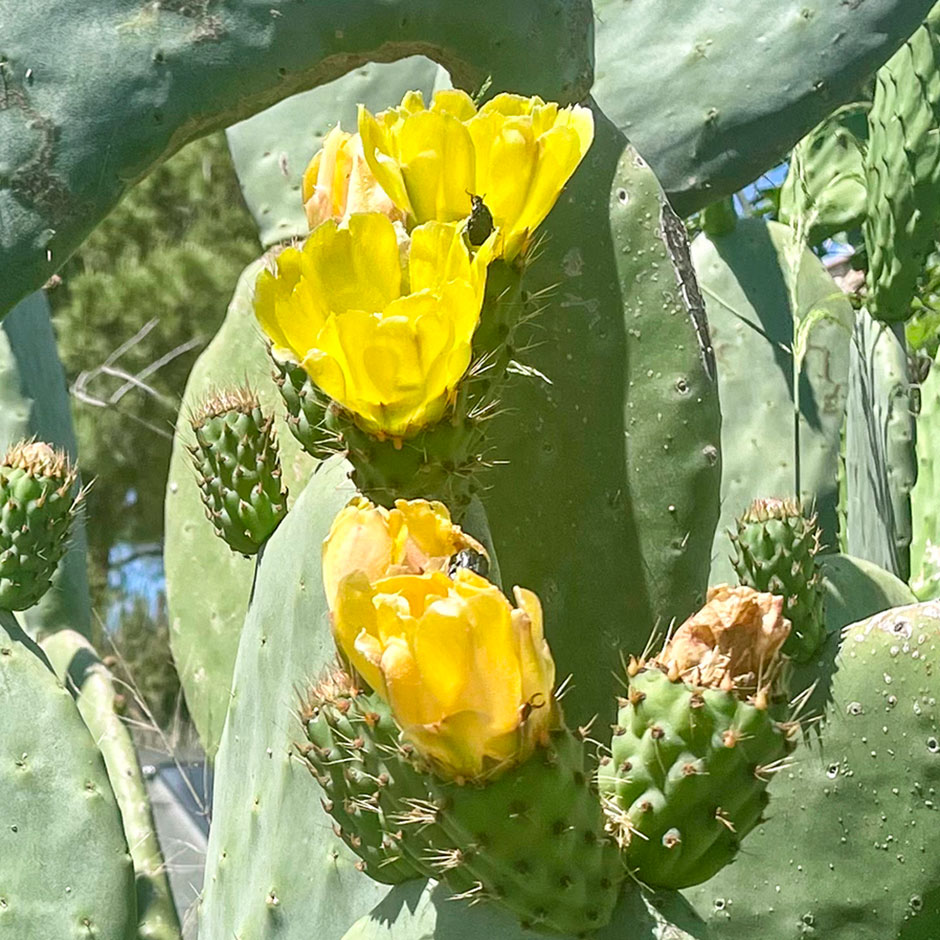
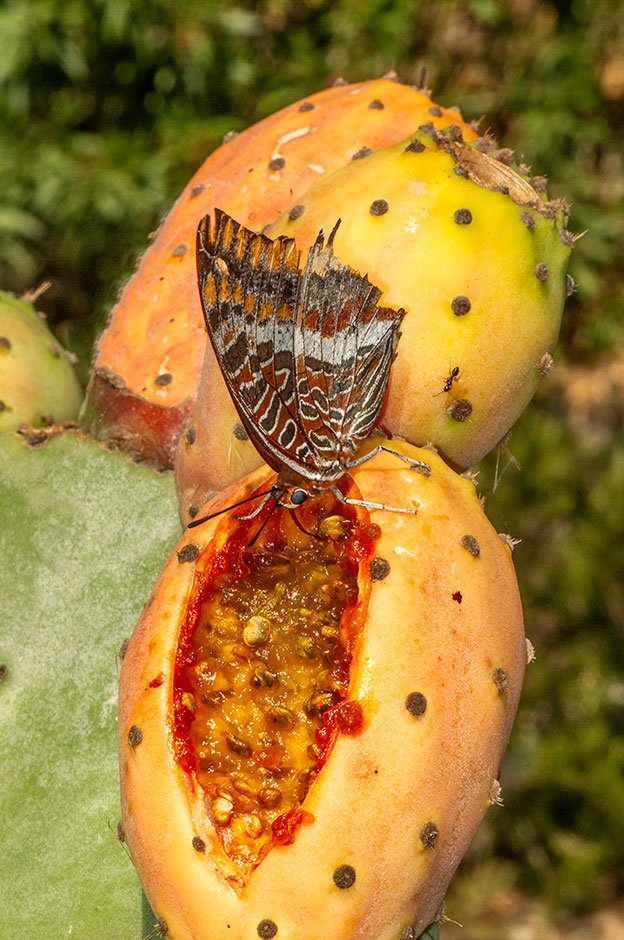
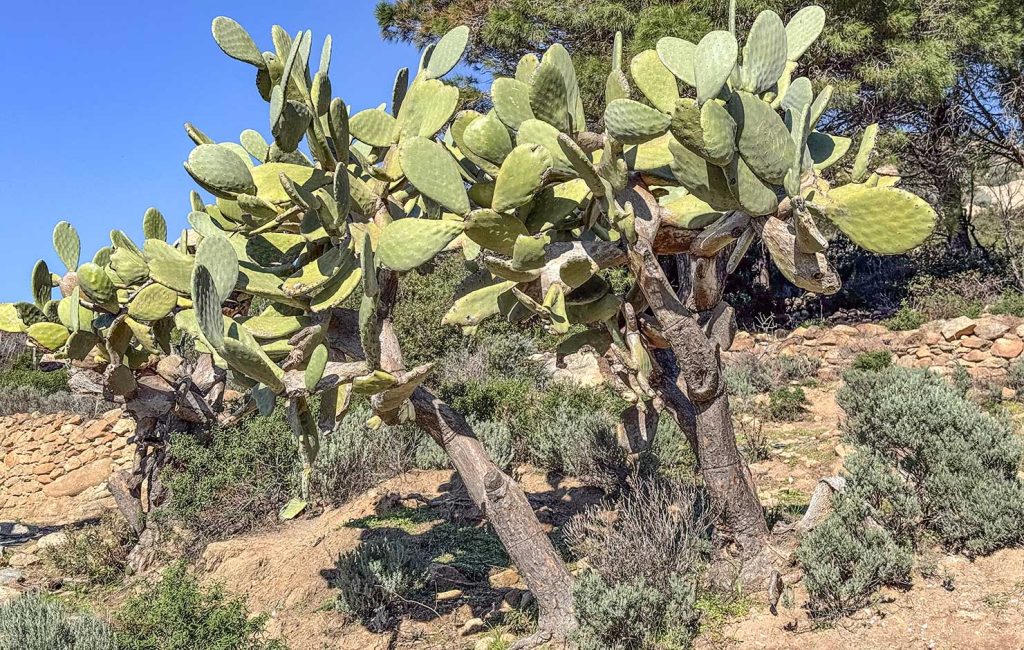
Native to the American tropics, the prickly pear was cultivated by the Maya and Aztecs. In Italy the plant was first reported in 1565 and later classified as an invasive neophyte (introduced by humans). On Elba it can now be considered naturalized, as it has been colonizing arid and rocky areas for centuries, taking habitat away from native plant communities, although it does not pose a significant threat to biodiversity. The prickly pear has an upright habit and is characterized by large, thick, green pads (called “pitte” on Elba). The fleshy tissues of the plant are organized to store large reserves of water, enabling it to survive periods of drought. Large flowers with bright yellow petals bloom on the pads. The fruit is oval and spiny, with a color that varies from yellow to red when ripe and edible. The spines of the fruit are small but particularly annoying. Parts of the plant are used for medicinal and cosmetic purposes. On the island, as in the rest of the Mediterranean, it was used to consolidate the soil, as a windbreak, to form impenetrable hedges, and to consume its fruits.
🌿 Botanical Information